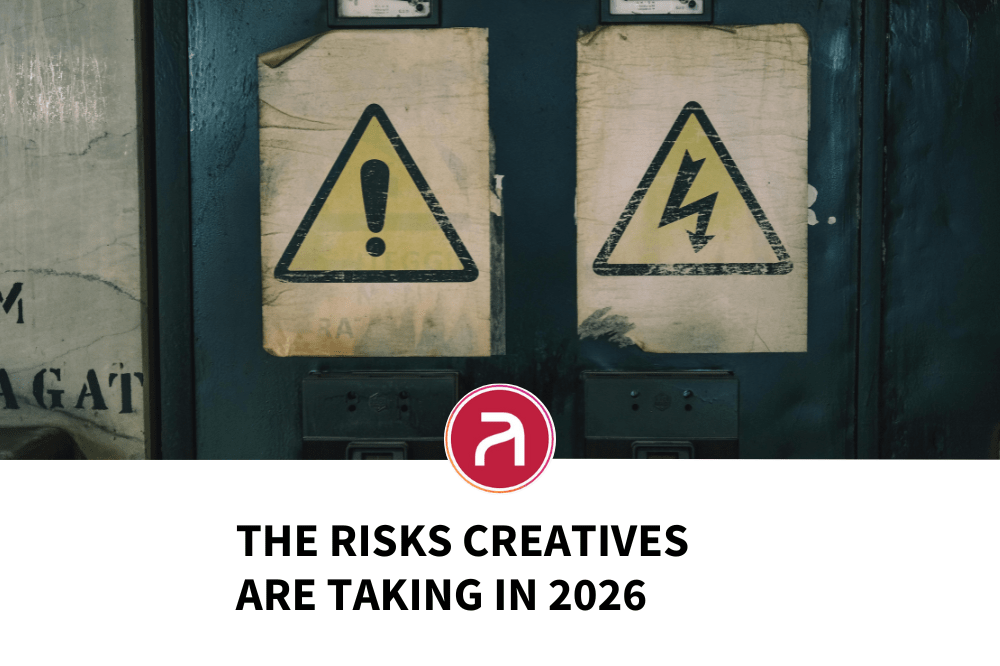
The creative industry love to celebrate bold thinking. Award shows champion brave ideas. Case studies highlight disruptive campaigns. Brands talk about innovation as if it is standard practice.
But when it comes to everyday work, risk is more complicated.
We asked our community how often they take creative risks at work. The results were clear. Twenty nine percent said often, it is how they grow. Seventy one percent said sometimes, but within limits. No one selected rarely or never.
That alone says something powerful. Creatives want to take risks. No one is actively avoiding growth. But most are navigating it carefully, balancing ambition with commercial reality.
So what is really happening beneath the surface, and what will define the risky creatives of 2026?
Creatives Want to Push Further Than They Currently Can
The fact that seventy one percent chose sometimes within limits is not a sign of hesitation. It is a sign of constraint.
Many creatives are operating inside tight parameters. Brand guidelines are rigid. Budgets are lean. Stakeholders are cautious. Timelines leave little room for experimentation. In freelance settings, there is the added pressure of repeat work and referrals. When your next contract depends on this one, boldness can feel like a gamble.
Yet in conversations with designers, writers, developers and strategists, the desire to do more is obvious. They want to stretch ideas further. They want to test new formats. They want to explore emerging tools. They want to make work they are genuinely proud of, not just work that ticks the brief.
The appetite for risk is there. The environment does not always support it.
In 2026, the organisations that unlock this appetite will see the biggest creative returns.
What Creative Risk Actually Looks Like
Risk in 2026 is rarely reckless. It is rarely about shocking for the sake of it.
It looks like proposing a stronger concept when the safe option would be easier to approve.
It looks like introducing a new technology or workflow that improves output.
It looks like challenging a brief respectfully when something does not feel right.
It looks like carving out space for deeper storytelling instead of surface level content.
It also looks like investing in personal growth. Learning AI tools before they are mandated. Exploring immersive formats. Testing short form video or interactive experiences before clients demand them.
Creative risk is thoughtful progression, not chaos.
The twenty nine percent who say they often take risks tend to share a mindset. They see discomfort as part of growth. They understand that not every idea will land, but some will elevate their reputation and skillset dramatically.
Why Risk Taking Feels Harder Right Now
The current landscape makes risk feel heavier.
AI has accelerated production. Clients expect faster turnaround. Economic pressures make stakeholders more cautious. Teams are smaller and output expectations are higher.
In this environment, safe work feels efficient. Experimental work feels uncertain.
But here is the tension. As automation increases, safe work becomes easier to replicate. When tools can generate competent output in seconds, differentiation comes from human judgement, originality and courage.
If everyone stays inside the lines, the industry becomes visually and strategically repetitive. The creatives who will stand out in 2026 are not the fastest producers. They are the ones who know when and how to push.
How to Take Smarter Risks in 2026
Risk without strategy is noise. Risk grounded in context is leadership.
Understand the commercial objective deeply before you push creatively. When your idea clearly supports business outcomes, it is easier to defend.
Present layered options. A safe route, a stretch option and a bold vision. This gives stakeholders confidence while still opening the door to innovation.
Build trust through consistency. When you are known for delivering high quality work on time, your ideas carry more weight.
Choose your environment carefully. Some companies talk about innovation but punish failure. Others genuinely reward experimentation. The difference shapes careers.
For freelancers, position risk as added value. Show how a braver direction could increase engagement, brand differentiation or long term impact. Framing risk commercially reduces perceived danger.
What This Means for Creative Careers
The creatives who grow fastest are rarely the ones who stay comfortable.
Taking risks builds more than a stronger portfolio. It builds resilience, sharper thinking, better communication and stronger leadership skills. It teaches you how to defend ideas with clarity and confidence.
It also builds reputation. Being known as someone who brings fresh thinking, not just execution, changes the opportunities that come your way.
In 2026, as industries continue to evolve rapidly, the ability to adapt and experiment will be essential. Creative careers that remain static risk becoming obsolete. Those that stretch intentionally will stay relevant.
Where Artisan Comes In
At Artisan, we see this balance every day. Clients want dependable creatives, but they also want thinkers. They want people who can execute beautifully and elevate ideas.
We work with freelancers and permanent creatives to position themselves as thoughtful innovators. That means helping refine portfolios to highlight strategic thinking, not just finished visuals. It means guiding conversations around impact and growth. It means connecting talent with environments that genuinely value creative exploration.
For businesses, we help build teams that are not just safe pairs of hands, but confident problem solvers. Teams that understand commercial goals and are willing to stretch beyond the obvious.
The risky creatives of 2026 will not be reckless. They will be strategic. They will know when to push, how to articulate their thinking and where they are supported to do their best work.
If you are ready to move from sometimes within limits to often and growing, the right environment makes all the difference.