The AI conversation has officially shifted from fascination to responsibility. Your poll results make that clear. Most creatives aren’t just playing with AI tools anymore. They’re thinking about ethical use, transparency and how these choices will shape their reputation in 2026.
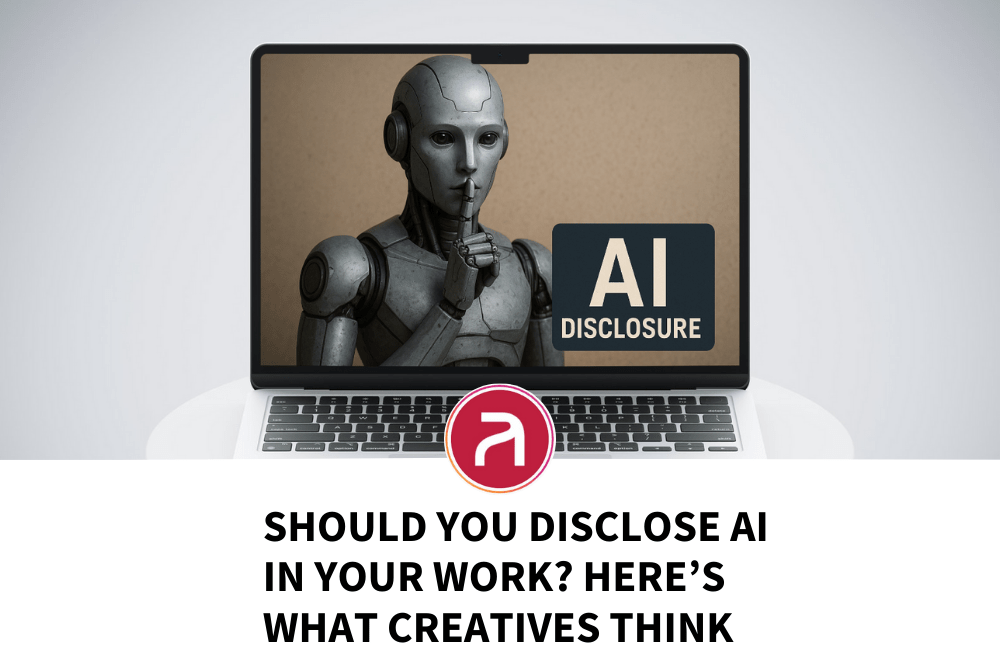
In the poll, a strong 72 percent said creatives should disclose when AI is used in their work. Another 17 percent argued the final result matters more than the method. 6 percent said disclosure is only needed when AI does more than half the job. And the final 6 percent had approaches of their own, usually tied to nuance, context or the client relationship.
This isn’t a simple yes or no question. It hits on trust, creative integrity, client expectations and the reality that AI output is becoming nearly invisible. So let’s explore what creatives are really navigating right now and how this conversation is likely to evolve in 2026.
Why Transparency Matters to Most Creatives
The majority leaning toward disclosure tells us something important. It’s not just about ethics. It’s about protecting the value of human creativity in an AI-saturated market.
Many creatives feel that acknowledging AI:
- Builds trust with clients who care about authenticity
- Shows confidence in their own process
- Prevents misunderstandings around timelines, effort and ownership
- Positions them as professionals who use tools wisely, not shortcuts
There’s also a strong brand and reputation element. As AI-generated work becomes harder to detect, transparency becomes a point of difference. Creatives who openly explain how they collaborate with technology are often seen as more modern and trustworthy, not less skilled.
The “Result Is What Counts” Group
Nearly one in five respondents made it clear that the process doesn’t matter if the work meets the brief. This mindset is common in fast-paced creative environments where deadlines, deliverables and outcomes dominate.
These creatives often argue that:
- We don’t declare when we use Photoshop, Figma templates or stock images
- AI is becoming part of the standard toolkit
- Clients hire outcomes, not methods
- Disclosure can complicate projects unnecessarily
There’s truth in this. Not every project requires a detailed process breakdown. Sometimes the work is the work.
The Middle Ground
A small but important percentage said disclosure should only happen when the work is more than 50 percent AI generated. This group tends to take a practical viewpoint. They want to avoid misleading clients but don’t believe every small AI-assisted tweak needs reporting.
For them, AI is like any other tool. If you used it heavily, say so. If it only contributed a fragment, treat it like any part of your process.
What “Other” Really Means
The responses in the “other” category reveal a reality for many creatives. This isn’t a one-size-fits-all decision. Context shapes everything.
Some of the nuanced attitudes include:
- Disclose when the client requests it
- Be transparent for brand or consumer-facing work
- Keep internal AI use private unless relevant
- Share the tools but not the percentage
- Discuss AI openly at the start of a project so expectations are aligned
These answers reflect a growing awareness that AI norms differ across agencies, industries and even generations of creatives.
What This Means for 2026
AI use in creative work will only grow. The question is how openly people will talk about it. Here are the big shifts likely to define 2026.
1. AI disclosure becomes part of contracts and scopes
Organisations will start building AI clauses into briefs, NDAs, contracts and pitches. Not because they want to police creativity but because they want clarity around ownership, copyright and originality.
2. A standard etiquette of disclosure will emerge
Just as we slowly developed rules about stock imagery, retouching and templated design, AI will form its own natural etiquette. Early adopters who get comfortable with this now will stand out.
3. AI fluency becomes a core creative skill
Clients won’t just ask whether you used AI. They’ll want to know how you used it to improve outcomes. Transparency will double as a selling point, not a confession.
4. Consumers start to care more
Especially in digital art, photography, writing and video. Clear disclosure may become part of brand trust, not just creative ethics.
5. The stigma fades
As AI becomes normalised, disclosure won’t be about guilt or defence. It becomes routine, like listing tools in a case study.
How to Navigate AI Transparency Right Now
Here are practical ways creatives can handle this conversation today.
Set expectations early
Explain your process during the briefing stage. Clients appreciate clarity and it stops any issues later.
Document your workflow
Keeping notes on where AI contributed helps you make informed decisions about disclosure.
Understand your client’s values
Some industries require transparency. Others don’t mind at all. Ask questions early.
Be proud of your hybrid workflow
AI doesn’t replace your creativity. It enhances your capability. Frame it that way.
Stay informed about copyright considerations
AI and ownership laws are changing fast. Understanding the landscape protects your work.
Use transparency as a differentiator
Your future clients want someone who understands modern tools, not someone who hides them.
How Artisan Supports Creatives Navigating AI
Artisan works closely with creatives and clients across Australia who are figuring out exactly this. Whether it’s in design, content, digital, production or strategy, the conversation about AI is becoming increasingly important in recruitment and hiring.
Here’s how we help:
- We match creatives with clients who appreciate modern tools and processes
- We guide freelancers on how to communicate their workflow confidently
- We help employers understand the value of AI fluency rather than fearing it
- We support talent who want to upskill and position AI as a competitive advantage
- We advise on emerging industry expectations and transparency norms
If you’re a creative trying to figure out how to integrate AI, how much to disclose or how to position your evolving skill set for 2026, we can support you with clarity, market insight and opportunities that value the way you work.
Want help navigating the changing creative landscape or finding your next role or freelancer? Chat to Artisan anytime.