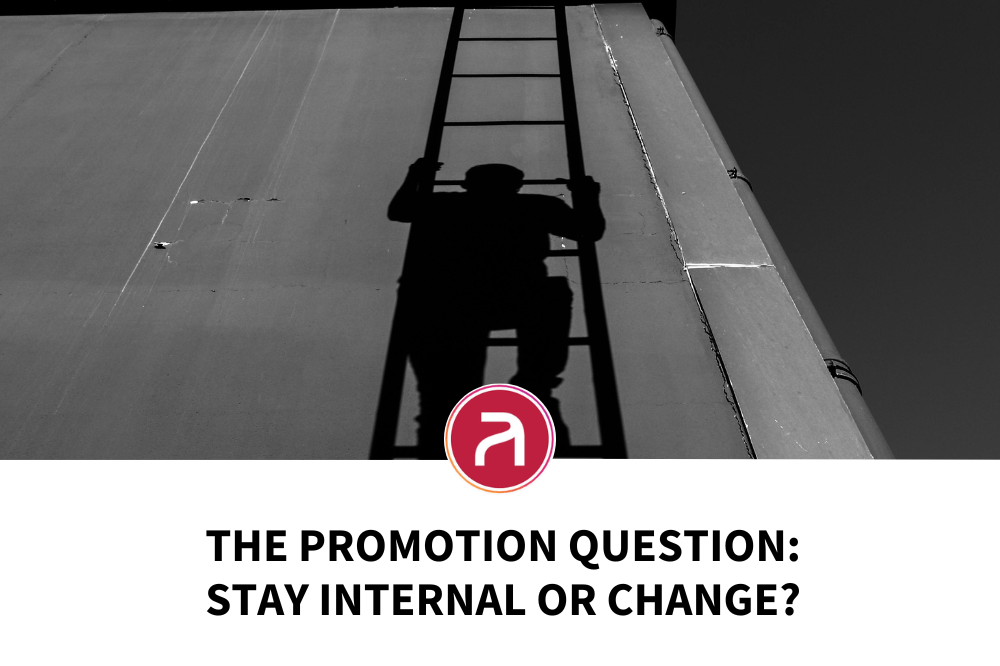
Career progression used to follow a predictable story. Join a company. Prove yourself. Get promoted. Climb steadily upward.
But the reality in 2026 feels different.
We asked our community whether it is easier to get promoted internally or by moving roles. Only 15 percent said internally. A clear majority, 59 percent, said moving companies. No one believed it was equally the same. The remaining votes pointed to leadership as the deciding factor.
That gap is significant. It reflects a growing belief that the fastest way up is often out.
Why Moving Companies Feels Easier
When you move companies, you reset perception.
Internally, your reputation is shaped by your history. People remember your junior days. They anchor you to your starting salary. They see you through the lens of the role you were hired for.
Externally, you are evaluated at face value. Your experience is presented in its strongest light. You negotiate based on market rates, not incremental increases. You are assessed for the job you want, not the one you currently hold.
This is why so many creatives and digital professionals see moving companies as the clearer path to progression. It often comes with a larger salary jump, a stronger title and a clean slate.
In fast moving industries, external mobility has become normalised. It is not seen as disloyal. It is seen as strategic.
The Internal Promotion Challenge
Internal progression is possible, but it often requires more than just doing good work.
It requires visibility. Advocacy. Clear communication about ambition. Supportive leadership. Structured review processes. Budget allocation. Timing.
In many organisations, promotions depend on headcount planning rather than individual readiness. A talented mid level designer may be ready for senior responsibilities, but if there is no approved senior role, progression stalls.
This can lead to frustration. Creatives feel ready. The business feels constrained. Momentum slows.
That 15 percent who believe internal progression is easier likely sit within organisations where leadership actively develops and promotes from within. Where growth pathways are defined. Where managers champion their team members.
Leadership makes a difference.
The Role of Perception and Value
There is also a psychological element at play.
When someone joins a new company, there is an assumption of capability. They were chosen from a competitive pool. They bring outside perspective. They are seen as a hire.
Internally, familiarity can dilute perceived growth. Incremental improvement is less visible than fresh arrival. The person who has grown steadily over three years may be overlooked compared to the external candidate with a polished CV.
In 2026, as the market becomes more competitive, businesses will need to examine how they assess internal talent. Losing strong performers because they feel stuck is costly.
What This Means for Creatives
If you are navigating this question personally, clarity matters.
Are you in an environment with defined growth pathways
Do you have leadership that actively invests in your development
Have you communicated your ambition clearly
If the answer is yes, internal progression may be realistic. If the answer is no, external movement might be the more strategic choice.
Moving roles is not failure. It is not impatience. It can be a deliberate step toward better alignment, higher pay or broader experience.
At the same time, constantly moving without building depth can weaken long term positioning. The goal is intentional progression, not reactive exits.
What Employers Need to Hear
The poll results should act as a wake up call for leadership teams.
If nearly sixty percent of professionals believe they are more likely to progress by leaving, internal retention strategies need attention.
Clear career frameworks. Transparent promotion criteria. Regular progression conversations. Budget planning that supports growth. These are not perks. They are retention tools.
In creative industries especially, losing experienced talent impacts culture, continuity and client trust.
The 2026 Landscape
As hybrid work and global hiring continue, external mobility will remain high. Professionals have more visibility into market salaries and opportunities than ever before. Platforms make comparison easy. Recruiters are proactive.
This means internal progression cannot rely on loyalty alone. It must be competitive.
Companies that create visible growth paths will retain ambitious creatives. Those that do not will continue to see talent leave for the next title elsewhere.
Where Artisan Comes In
At Artisan, we see both sides of this equation every day.
We speak to creatives who feel ready for more but cannot see a pathway internally. We also partner with clients who genuinely want to retain and develop their teams but lack structured frameworks.
For professionals, we help assess whether the growth you are seeking is achievable where you are, or whether a move would accelerate your trajectory. We look at skill alignment, market value and long term positioning.
For businesses, we advise on building progression structures that reduce unnecessary turnover. Retaining great talent is often more strategic than replacing it.
In 2026, promotion is no longer a simple ladder. It is a choice between staying and shaping your path internally or stepping outward to level up faster.
The key is making that decision intentionally, not by default.