The question of whether generative AI should be credited in portfolios sparked debate from our recent poll, opinions are divided: 47% of respondents believe AI is merely a tool or skill and doesn’t require credit, while 33% think it should be acknowledged so others are aware. A smaller group, 13%, suggest crediting AI only if it significantly contributed to the project, and 7% feel it should be disregarded altogether. This discussion underscores a broader tension about transparency, authorship, and the evolving role of AI in the creative process. So, how should creative professionals navigate this landscape?
AI as a Tool: Why Some Creatives See No Need for Credit
For many in the sector, AI is viewed as a tool akin to Photoshop or a camera, simply an extension of the artist’s skill set. This perspective is supported by the 47% of poll respondents who argue that AI does not require specific crediting. The rationale is that creative professionals have always used a variety of tools to realise their visions, what matters is the final output, not the means by which it was achieved.
This viewpoint is practical, particularly in industries like advertising and digital design, where speed and efficiency are paramount. The creative scene is fast paced and highly competitive, and AI can streamline workflows and open up new possibilities for innovation. However, while this approach highlights the seamless integration of technology into creative processes, it also raises questions about transparency and the potential erosion of traditional skills.
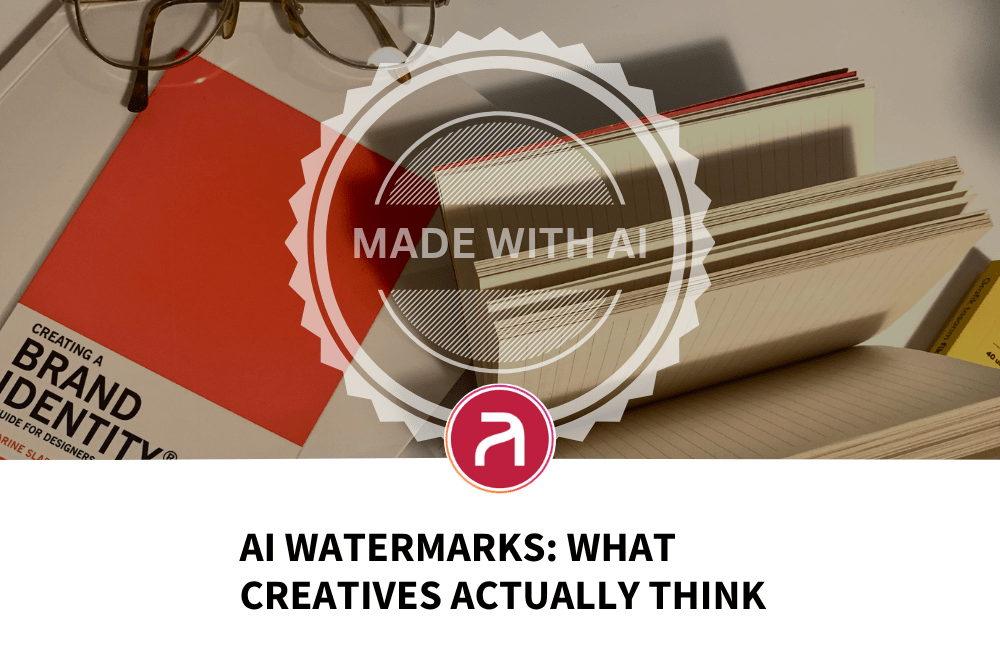
The door will be wide open when AI watermarking becomes more prevalent.
The Case for Crediting AI: Transparency and Ethical Considerations
On the flip side, 33% of respondents emphasise the importance of transparency by advocating for AI credit in portfolios. This group believes that acknowledging AI’s role is crucial for ethical reasons and to provide a complete picture of the creative process. In an era where authenticity is highly valued, especially in sectors like publishing and fine arts, transparency can build trust with audiences and clients.
Crediting AI can clarify the human creator’s unique contributions, distinguishing their vision and decision making from the machine’s input. This distinction is vital in maintaining the integrity of the creative industry, ensuring that credit is given where it is due, and helping to differentiate human creativity from machine generated output. By openly discussing AI’s role, professionals can foster a dialogue about the ethical use of technology in creative work.
Significant Input: The Middle Ground
A smaller portion of respondents, 13%, suggest AI should only be credited if it has provided significant input to a project. This perspective offers a balanced approach, recognising that while AI can assist, it is the depth of its involvement that should determine whether it receives credit. This is particularly relevant in projects where AI’s contribution is substantial, such as generative design or AI driven art installations.
In practical terms, this approach requires clear criteria for assessing AI’s input, which can be challenging but not insurmountable. For instance, if AI generated elements form the core of a creative concept or significantly influence the final outcome, acknowledging its role could be justified. This mindset encourages creatives to evaluate the extent of AI’s contribution and credit it accordingly, fostering a nuanced understanding of technology’s role in the creative process.
The Rejection of AI Credit: A Minority View
Interestingly, 7% of participants feel that AI should be disregarded altogether when it comes to crediting. This stance might stem from a belief that AI’s role is overemphasised or that traditional human skills should remain at the forefront. While this view is not widely held, it highlights ongoing concerns about AI’s impact on employment and the potential devaluation of human creativity.
For some, this rejection may also represent a resistance to change or a preference for maintaining clear boundaries between human and machine contributions. However, as AI continues to evolve and integrate into creative practices, this perspective may need to adapt to reflect the realities of the modern creative landscape.
So How Do You Actually Handle This In Your Portfolio?
The poll shows there’s no single right answer, but that doesn’t mean you’re stuck guessing. Here’s a practical way to think about it that lets you use AI where it helps without muddying who did the work.
Draw a line between AI as assistance and AI as authorship
A useful gut check: did AI speed up something you already knew how to do, or did it generate something you couldn’t have made yourself? Using AI to remove a background, rough out layout options, generate placeholder copy, or clean up an image is closer to using a plugin. It’s assistance, and most people, including 47% of the poll, wouldn’t expect a credit line for that. But if AI generated the core concept, the final image, or a substantial chunk of the actual deliverable, that’s authorship-level input and it belongs in the conversation about credit.
Use tiered language instead of an all or nothing credit
You don’t need a dramatic disclaimer on every piece. A simple, low-key approach works better:
– No mention needed: AI used for minor production tasks like background removal, upscaling, spellchecking, or generating quick reference thumbnails you then rebuilt by hand.
– A quiet note: AI used to accelerate part of the process, for example “concept explored with AI assistance, final execution and design by [name].” This keeps you visible as the author while being honest about your workflow.
– A clear credit line: AI used to generate a substantial or final element of the work, for example “image generated using [tool], creative direction and prompt design by [name].” This is the version that matches the 33% who want acknowledgement and the 13% who want credit tied to significant contribution.
Protect how your own work gets portrayed
If you’re worried that crediting AI will make clients or employers assume you didn’t do the work, the fix isn’t hiding the tool, it’s being specific about your role. Instead of a vague “made with AI” tag, describe what you actually did: the brief, the direction, the iterations, the editing, the final judgement calls. That’s the part AI can’t take credit for, and it’s the part that actually shows your skill. A portfolio that says “I directed and refined this” reads very differently to one that just says “AI generated,” even when the same tool was involved.
Keep a simple internal record
Even if you don’t credit every AI assisted piece publicly, it helps to keep your own private note of which tools you used and how, project by project. If a client or employer ever asks, or if industry norms shift toward mandatory disclosure, you’ll have the answer ready instead of trying to reconstruct it after the fact.
Set your own standard and be consistent
Because there’s no universal rule yet, the most trustworthy approach is picking a standard for yourself, writing it down, and applying it the same way across your whole portfolio. Inconsistent crediting, credit on one piece and silence on a similar one, is what actually damages trust, more than the specific threshold you choose.
Where Artisan Comes In
Artisan plays a pivotal role in helping creatives and organisations navigate these complex issues. By connecting talented individuals with the right opportunities and advising companies on hiring strategies, Artisan ensures that both creatives and businesses can thrive in an AI enhanced future. Whether you’re a designer in Brisbane looking to understand how AI can enhance your portfolio or a company in need of guidance on integrating AI into your creative team, Artisan provides the expertise and support you need. Embracing AI’s potential while maintaining transparency and ethical standards is key to future success, and Artisan is here to guide you every step of the way.