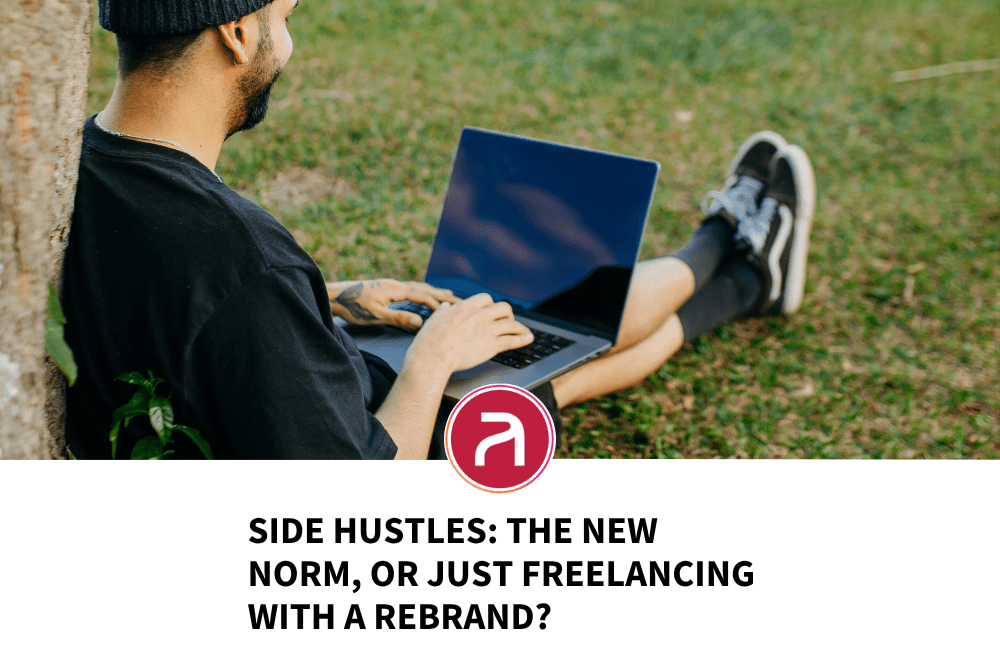
Artisan recently ran a poll asking creatives a simple question: Do side hustles add value to your life? The answers were split in a way that says a lot about where the industry is right now. Forty three per cent said yes, it genuinely adds something. Twenty nine per cent called it a major distraction. And another twenty nine per cent are still on the fence, thinking about starting one but not quite there yet.
That’s basically a three way tie, and it’s worth sitting with for a second. There’s no consensus here. Some creatives are thriving with a second thing going on the side, some are burning out from it, and a good chunk are still deciding whether to jump in at all. So which is it? Are side hustles genuinely reshaping how creative careers work, or is this just freelancing wearing a trendier name tag?
The numbers say this is bigger than a trend
If you think side hustling is a niche thing a few ambitious people do on weekends, the data says otherwise. Westpac’s Side Hustle National Study, released in November 2025, found that 55% of Australians are either currently earning from a side hustle or seriously considering starting one. Twenty seven per cent already have one running, and another 28% are planning to launch something in the next year. That’s over a thousand people surveyed across the country, and it points to something structural rather than a fad.
Money is the obvious driver. Seventy seven per cent of side hustlers say extra income is their main motivation, and that number climbs even higher for women and people in regional areas, sitting around 83%. It’s not hard to see why. Cost of living pressure has pushed a lot of people to stop relying on one paycheque and start building a few smaller ones instead.
What’s interesting is who’s doing it. Younger Australians, particularly those between 18 and 34, aren’t just picking up one side gig. On average they’re juggling 1.75 income streams. They’re not testing the water, they’re stacking.
And creative work is right in the middle of it. According to research from BizCover, retail and e-commerce sit at the top of the most searched side hustle categories in Australia, but creative content comes in second at around 20%, ahead of general gig services. People are searching “how to make money online” close to 180,000 times a year in Australia alone, which tells you this isn’t idle curiosity, it’s people actively trying to figure out how to make it work.
So is a side hustle just freelancing with better branding?
Here’s where it gets murkier, and honestly, where the original poll’s question gets more interesting. In the creative world specifically, the line between “side hustle” and “freelancing” is blurry at best.
Technically they’re not the same thing. Freelancing is client based, project by project work, usually still within your main craft. If you’re a graphic designer taking on branding projects after hours, that’s freelancing. A side hustle can be that too, but it doesn’t have to sit anywhere near your day job. Selling prints on Etsy, running a niche newsletter, flipping vintage clothing, building a small app on weekends, these are side hustles that might have nothing to do with your actual creative discipline.
But in practice, a lot of creatives use the terms interchangeably, and honestly, who could blame them. If you’re a copywriter who freelances on the side, is that a side hustle or just… more of your job? The distinction matters less to the person doing the work and more to how we talk about it. Freelancing tends to get framed as “serious extra work in your field.” Side hustling gets framed as something a bit more experimental, a bit more optional, a bit more fun. Same hours spent, different vibe attached to it.
What the Westpac data hints at is that most Australians aren’t drawing a hard line either. People are stacking multiple things, some in their field, some completely unrelated, and calling the whole mix a side hustle. For creatives specifically, this often looks like: full time job in the industry, freelance client work in the same discipline, plus a completely separate creative or non creative project on the side. Three layers, one broad label.
The part nobody puts on a poll
Here’s the less glamorous side, and it’s worth being honest about it. Creative work in Australia is already precarious for a lot of people, and side hustling doesn’t always come from a place of ambition. Sometimes it comes from necessity.
A recent RMIT led study into Australia’s visual arts and craft sector found conditions have been getting worse, not better. The average income from visual art or craft practice in 2023-24 sat at just $13,937. Nearly half of the artists surveyed had done unpaid work in the past year, and 63% said they were moderately or very stressed about covering basic living costs. Researchers actually compared the sector directly to the gig economy, pointing out that many artists don’t even know what award or agreement, if any, covers their work.
That context matters. When 29% of Artisan’s poll respondents say their side hustle is a major distraction, it’s not necessarily because they’re bad at time management. For a lot of creatives, “side hustle” isn’t a fun personal project bolted onto a stable job. It’s a financial buffer for an already unstable main income. That’s a very different emotional experience to someone doing it purely for creative fulfilment or extra spending money.
This is also why work life balance comes up so much in these conversations. If your side hustle exists because your main creative income isn’t covering rent, burnout isn’t a risk, it’s basically guaranteed without some serious boundaries.
If you’re actually thinking about starting one
If you’re in that 29% still on the fence, here’s a more grounded way to think it through rather than just diving in because everyone else seems to be doing it.
Get honest about why you want one. There’s a real difference between “I want extra income because things are tight” and “I want a creative outlet that isn’t tied to client demands.” Both are valid reasons, but they lead to very different kinds of side hustles. If it’s financial, you’re optimising for reliable, faster paying work. If it’s creative fulfilment, you might deliberately want something slower and less commercial than your day job.
Work out if it overlaps with your main gig or not. A side hustle in your own field (illustration on the side of an illustration job, say) can build your portfolio and client base at the same time. One that’s completely unrelated (that same illustrator running a candle business) gives your brain more of a genuine break, but it also means starting from zero on skills, audience and credibility.
Do a real gut check on time. Not “I’ll find an hour somewhere,” but actually look at your calendar. Westpac’s research shows most side hustlers are pulling in modest amounts, two thirds earn under $500 a month, so it’s worth being realistic about what your time is actually worth against what you’ll likely make, especially in the first several months.
Start smaller than feels satisfying. Test the idea with the smallest possible version before building anything elaborate. A few pieces sold directly to friends, a handful of freelance briefs picked up outside your usual work, one blog post published to see if anyone reads it. You’ll learn more from that than from a business plan.
Put an actual boundary around it. Block specific hours rather than “whenever I have time,” because whenever I have time quietly turns into every evening and weekend. Given how much precarity already exists in creative careers, protecting your non work hours isn’t optional extra credit, it’s part of staying in the industry long term.
Where this leaves things
The Artisan poll’s three way split makes more sense once you look at what’s actually going on underneath it. Side hustling in Australia isn’t a small trend, ALOT of people are either doing it or thinking about it. But for creatives, it’s tangled up with an industry that’s already asking a lot of people for not much return. Some are side hustling because it genuinely adds something to their life. Others are side hustling because their main creative income doesn’t stretch far enough. Both are real, and both are showing up in that poll data.
Whether you call it a side hustle or just freelancing on top of freelancing, the honest answer is that it depends entirely on why you’re doing it and whether your calendar can actually hold it. If you’re weighing it up, that’s the conversation worth having with yourself before you have it with a client.
If you’re navigating multiple income streams in your creative career, or looking for a main role that actually gives you room to breathe, Artisan works with creative talent across the Australian market to help find roles that fit around the whole picture, not just the job title.
Sources:
- Westpac, Side Hustle National Study, November 2025
- BizCover, “The Most In-Demand and Best Earning Side Hustles in Australia,” 2025
- RMIT University / University of Melbourne, study on Australia’s visual arts and craft workforce, 2025
- Artisan LinkedIn poll (as referenced in original article)